
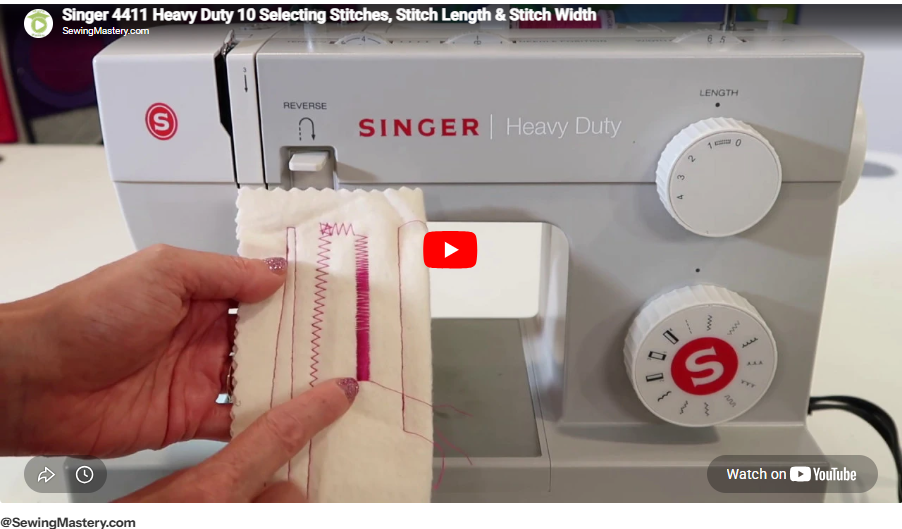
Stitch Length and Speed Mastery
(Controlling Your Machine for Flawless Results)
@SewingMastery.com
@SewingMastery.com
@SewingMastery.com
Step-by-Step Instructions:
Your sewing machine is a powerful tool, but leaving it on the default settings for every project will hold you back. Mastering the stitch length dial and the speed control slider allows you to handle everything from delicate curves to bulky denim with precision.
When to Adjust Settings:
- Changing fabric thickness (heavy vs. sheer)
- Sewing tight curves or sharp corners
- Topstitching for a decorative finish
- Basting layers together temporarily
- Gathering fabric for ruffles
Tips for Success:
- Test your stitch length on a scrap piece of your project’s fabric before sewing the actual garment or quilt.
- If you are a beginner, the speed control dial is your best friend—it prevents the machine from running away from you!
1. Find the Standard Length
- For basic construction on medium-weight fabrics (like quilting cotton), the standard stitch length is 2.5 mm (or about 10-12 stitches per inch). This provides a strong, durable seam that won’t easily pull apart.
2. Adjust for Thicker Fabrics
- When sewing bulky layers, denim, canvas, or fleece, the feed dogs have to work harder. Increase your stitch length to 3.0 mm or 3.5 mm. If you keep the stitch too short, the fabric will bunch up and the machine will stitch in place, creating a knot.
3. Adjust for Fine Fabrics or Curves
- When sewing lightweight silks, paper piecing, or navigating very tight curves, decrease your stitch length to 1.5 mm or 2.0 mm. Shorter stitches make curves significantly smoother and perforate paper patterns cleanly for easy tearing.
4. Master the Speed Control Dial
- Look for the slider on the front of your machine (usually marked with arrows or a turtle and a rabbit). This slider caps the maximum speed of the machine. If you set it to the “turtle,” you can press the foot pedal completely to the floor, and the machine will still only sew at a slow, steady, highly controlled pace.
5. Setting Up for Topstitching
- Topstitching is meant to be seen! For a professional, decorative look on the outside of garments or bags, lengthen your stitch to 3.0 mm or 3.5 mm. Use your speed dial to slow the machine down so you can keep the line perfectly straight.
6. Setting Up for Basting and Gathering
- To temporarily hold fabric together (basting) or to create ruffles (gathering), turn your stitch length dial all the way up to its maximum setting (usually 4.0 mm to 5.0 mm). These long stitches are incredibly easy to pull tight for gathering or rip out later.
Top FAQs for Stitch Length & Speed:
What is the standard stitch length for everyday sewing? +
The default or standard stitch length on most machines is 2.5 mm. This length is perfect for medium-weight wovens, providing a tight, secure seam that is still relatively easy to unpick if you make a mistake.
When should I use a very short stitch length? +
Use a short stitch length (1.5 mm to 2.0 mm) when sewing sheer or delicate fabrics to prevent puckering. Shorter stitches are also essential for navigating tight curves smoothly, and for foundation paper piecing (so the paper tears away easily without pulling the threads).
Why does my fabric pucker when I sew? +
Fabric puckering is often caused by a stitch length that is too long for the fabric weight, causing the feed dogs to pull too aggressively. It can also be caused by incorrect thread tension or using a dull needle.
What does the speed control dial actually do? +
The speed control dial (often indicated by a turtle and a rabbit) acts as a speed limit. If you set it to the lowest speed, you can press the foot pedal completely to the floor and the machine will not exceed that slow, designated pace, giving you ultimate control.
Should beginners always use the slowest speed? +
Not necessarily. While the slowest speed is great for curves and tricky spots, sewing too slowly on a long straight seam can actually make your stitching wobbly. A steady, medium speed creates better momentum and helps you feed the fabric in a straighter line.
How do I gather fabric using stitch length? +
Set your machine to the longest straight stitch possible (usually 4.0 or 5.0 mm). Sew two parallel rows along the edge of your fabric, leaving long thread tails at the start and end. Do not backstitch! Gently pull the two bobbin threads to gather the fabric into ruffles.
