
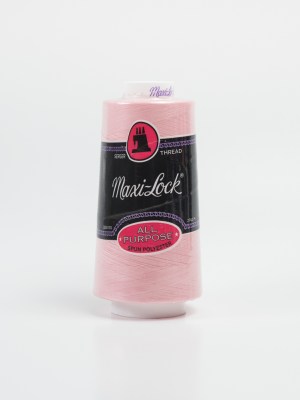
 Maxi-Lock Serger Thread 3000yds - Medium Pink
  Maxi-Lock Serger Thread 3000yds - Hacienda
  Maxi-Lock Stretch Serger Thread 2000yds - Lilac
  Maxi-Lock Stretch Serger Thread 2000yds - Purple
  Clover Pen Style Chaco Liner - Silver
 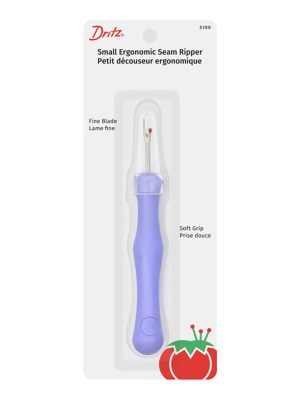 Dritz Small Ergonomic Seam Ripper - Purple
  Rit All-Purpose Box Fabric Dye - Cocoa Brown - 1 1/8oz
  Rit DyeMore Synthetic Fiber Dye - Sand Stone - 7oz Bottle
Precision Seam Allowances
@Professor Pincushion
@Let’s Learn To Sew
@Stephen Jones
Step-by-Step Instructions:
Precision in your seam allowances determines whether your final project fits together perfectly or ends up distorted. Whether you are sewing garments at 5/8″ or piecing a quilt at a scant 1/4″, setting up an accurate guide is the key to flawless construction.
Materials Needed:
- Sewing machine
- Small sewing gauge or ruler
- Magnetic seam guide, painter’s tape, or moleskin
- 1/4 inch piecing foot (optional for quilters)
Tips for Success:
- Always measure your seam allowance from the needle, not the edge of the presser foot!
- Focus your eyes on the guide and the raw edge of the fabric, never directly on the needle.
1. Understand the Seam Allowance
- A seam allowance is the distance between your line of stitching and the raw edge of the fabric. Garment patterns usually call for 5/8 inch, while quilting patterns require exactly 1/4 inch.
2. Measure from the Needle
- Lower your needle manually using the handwheel until it sits just above the needle plate. Take your sewing gauge or ruler and place the zero mark directly against the needle. Look outward to find your target measurement (e.g., 5/8″ or 1/4″).
3. Read the Needle Plate
- Most machines have etched lines on the metal plate indicating common seam allowances. Verify the accuracy of these lines using your ruler. If they are accurate, you can align the raw edge of your fabric with the corresponding line as you sew.
4. Create a Physical Guide
- For absolute precision, place a physical guide at your measured mark. A magnetic seam guide is excellent for straight lines (avoid using magnets near computerized screens). Alternatively, place a thick strip of painter’s tape or a stack of sticky notes exactly on the line to give your fabric a physical “wall” to ride against.
5. Master the “Scant” 1/4 Inch (For Quilting)
- When you sew a seam and fold the fabric open, the thread and the fold itself take up a microscopic amount of space. To ensure quilt blocks finish at the exact right size, measure your guide to be a scant 1/4 inch—which is exactly one thread-width narrower than a true 1/4 inch.
6. Test Your Seam
- Always sew a test seam on scrap fabric! Sew two 2-inch squares together, press the seam open (or to the side), and measure the middle. If it measures exactly 3.5 inches, your seam allowance is perfect. If it’s too big or small, adjust your guide slightly and test again.
Top FAQs for Precision Seam Allowances:
What is a seam allowance? +
The seam allowance is the space between the raw edge of your fabric and the actual line of stitching. Patterns are drafted with specific seam allowances built-in so the pieces fit together perfectly at the end.
Why is precision so important? +
If your seam allowance is too big, your finished project will be too small. If your seam allowance is too small, your garment will be too loose. In quilting, being off by just 1/16th of an inch across several seams means your blocks won’t line up at all.
What is a “scant” 1/4 inch? +
A scant 1/4 inch is a seam allowance that is approximately one thread-width narrower than a true 1/4 inch. Quilters use this to account for the thickness of the thread and the fold of the fabric, ensuring the block measures accurately when pressed open.
Can I just align the fabric with the edge of my presser foot? +
Only if you have measured it first! Standard presser feet vary wildly in width. Do not assume the edge of your foot is exactly 1/4″ or 5/8″ away from the needle until you drop the needle and measure it with a ruler.
How do I test my seam allowance accuracy? +
Sew three identically sized strips together (for example, three 2-inch wide strips). Press the seams. Measure the width of the middle strip. If it was sewn with a perfect 1/4″ seam on both sides, the middle strip should measure exactly 1.5 inches wide.
Where should I look while sewing? +
Never stare at the needle. Stare precisely at the point where the raw edge of your fabric lines up with your seam guide or etched line on the plate. This allows you to steer accurately and catch drifts before they happen.
