
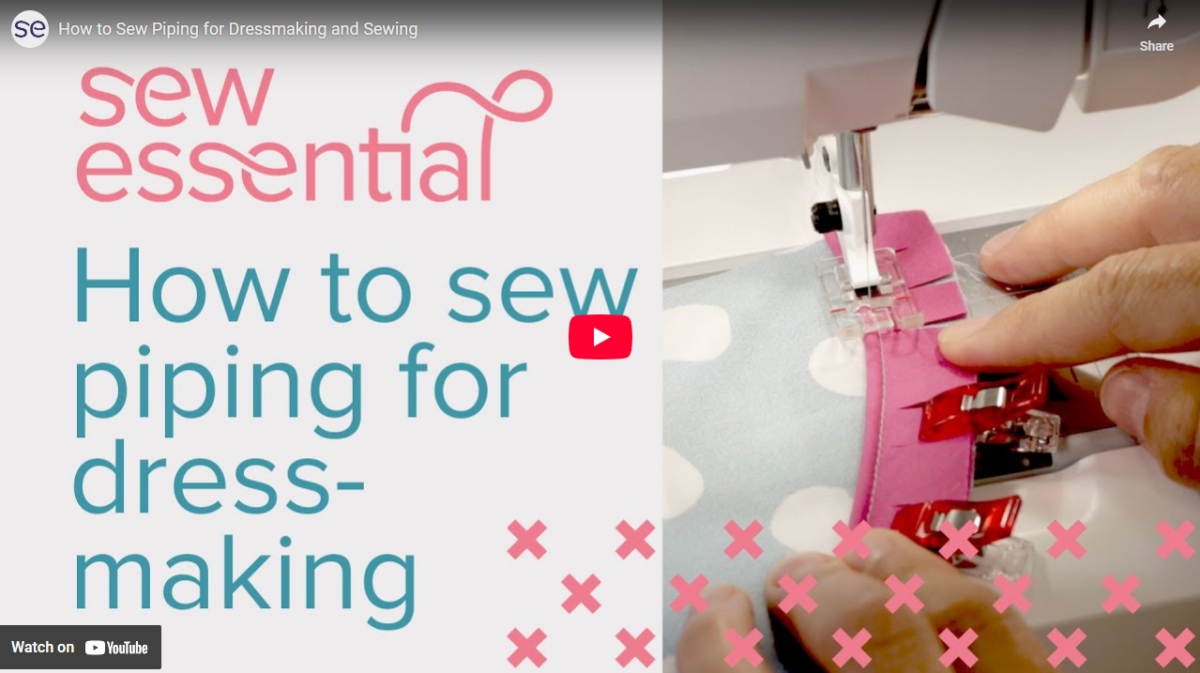
Corded Seams or Piping
@SewEssential
@doinaalexei9309
Step-by-Step Instructions:
Corded piping adds a beautifully defined, professional finish to seams and edges, making it a perfect technique for elevating garments, cushions, and home décor.
Materials Needed:
- Fabric for your main project
Matching or contrasting fabric for piping (bias cut) - Cording (cotton or polyester cord in desired thickness)
- Zipper foot or piping foot
- Sewing machine
- Coordinating thread
- Fabric scissors or rotary cutter
- Pins or fabric clips
- Ruler or measuring tape
- Iron and ironing board
Tips Before You Begin:
- Use bias strips for your piping fabric to ensure flexibility around curves.
- For a polished look, match your piping fabric or thread to your main fabric.
- Baste your piping to one fabric layer first before joining it with another layer to prevent shifting.
- If working with thick fabric or tight corners, trim seam allowances to reduce bulk.
1. Prepare the Bias Strips
- Cut strips of fabric on the bias (at a 45° angle to the grain) that are wide enough to wrap around your cording with a seam allowance (typically 1.5″ wide for 1/8″ cord).
- Join multiple strips if needed by sewing ends together at a 45° angle and pressing the seam open.
2. Insert the cording
- Fold the bias strip lengthwise with wrong sides together, enclosing the cord in the fold.
- Use a zipper foot or piping foot to stitch close to the cord, securing it inside the fabric.
- Baste if necessary to keep the cord from shifting.
3. Attach the Piping to the First Fabric Layer
- Align the raw edges of the piping with the raw edge of the fabric, piping side facing in.
- Pin or clip in place.
- Sew along the previous stitching line using your zipper foot or piping foot.
4. Join the Second Fabric Layer
- Place the second fabric piece right sides together with the first, sandwiching the piping in between.
- Pin and sew along the same stitch line again to ensure accuracy and a snug fit around the cord.
5. Clip Curves and Turn
- If working around curves, clip seam allowances without cutting into the stitching line to help the fabric turn smoothly.
- Turn your project right side out and press the seam gently for a crisp, raised corded effect.
