
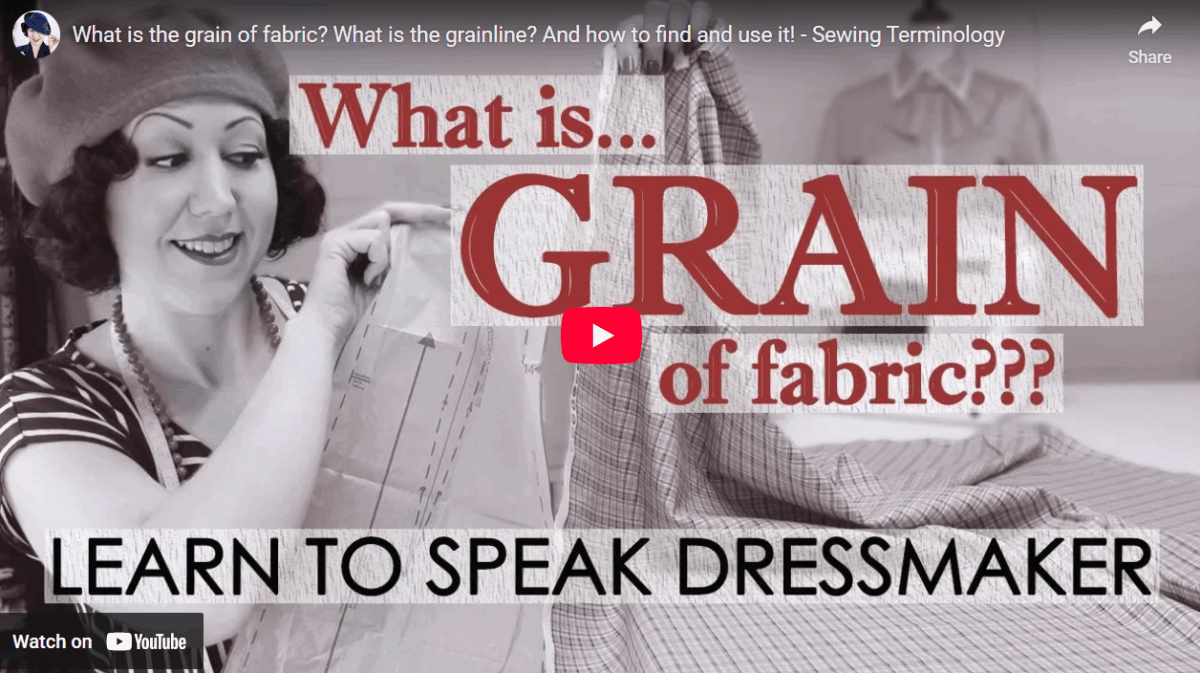
Fabric Types and Grainlines
@EvelynWood
@EvelynWood
Step-by-Step Instructions:
Master fabric grainlines and types to cut pattern pieces accurately, prevent warping, and achieve professional drape and fit in every garment—essential knowledge for beginner and advanced sewists working with woven and knit fabrics.
Materials Needed:
- Fabric samples (woven cotton, knit jersey, and bias-cut scrap for demonstration)
- Quilting ruler or straight edge
- Fabric scissors or rotary cutter
- Sewing pattern with grainline markings
- Fabric marking tool (chalk or washable marker)
- Pins
- Optional: Magnifying glass to examine fabric weave structure
- Optional: Iron and pressing surface for preparing fabric
Tips for Working with Fabric Grainlines:
- Prewash and press first: Always prepare fabric before identifying grainline to ensure selvages are straight and fabric is relaxed.
- Find the selvage: The finished edge along the lengthwise grain is your grainline anchor—use it to align pattern pieces accurately.
- Lengthwise grain has least stretch: Patterns are typically cut with the lengthwise grain running vertically for stability and minimal distortion.
- Crosswise grain has slight give: This grain runs perpendicular to the selvage and has a bit more stretch due to weave structure.
- True bias is 45 degrees: The true bias runs diagonally at exactly 45 degrees to both lengthwise and crosswise grains and has maximum stretch and drape.
- Check fabric on-grain: Before cutting, ensure crosswise threads are perpendicular to lengthwise threads; if fabric is off-grain, gently pull on the true bias to straighten.
- Respect grainline arrows: Always align pattern grainline arrows parallel to the selvage unless the pattern specifically calls for bias or crosswise cutting.
- Knits have different structure: Knit fabrics have courses (crosswise) and wales (lengthwise); most stretch runs across the width, and greatest recovery runs along the length.
1. Identify the Fabric Selvage
- Locate the selvage edge, which is the tightly woven finished edge running along both lengthwise sides of the fabric.
- The selvage often contains manufacturer information, colors dots, or a different texture than the rest of the fabric.
- The selvage runs parallel to the lengthwise grain (also called the straight grain or warp threads).
2. Understand Lengthwise Grain (Warp)
- The lengthwise grain runs parallel to the selvage from one end of the fabric to the other.
- These are the warp threads, which are held taut on the loom during weaving.
- Lengthwise grain has the least amount of stretch and provides the most stability.
- Most garment pieces are cut with the lengthwise grain running vertically (top to bottom) to prevent sagging and maintain shape.
- Pull gently on the lengthwise grain; you’ll feel minimal give.
3. Understand Crosswise Grain (Weft)
- The crosswise grain runs perpendicular to the selvage, from selvage to selvage.
- These are the weft threads, which are woven over and under the warp threads.
- Crosswise grain has slightly more stretch and give than lengthwise grain.
- Some pattern pieces, like waistbands or binding strips, may be cut on the crosswise grain for economy or slight ease.
- Pull gently on the crosswise grain; you’ll feel a bit more stretch than lengthwise.
4. Understand Bias Grain
- The bias runs at any diagonal angle to the lengthwise and crosswise grains.
- True bias is at exactly 45 degrees to both the lengthwise and crosswise grains.
- Bias has maximum stretch, drape, and flexibility because you’re pulling across the woven threads rather than along them.
- Bias-cut garments (like bias skirts or bias binding) hug curves beautifully and have fluid movement.
- Bias strips are used for binding curved edges, piping, and decorative trims because they can bend smoothly without puckering.
- Pull gently on the true bias; the fabric will stretch significantly and recover when released.
5. Check if Fabric is On-Grain
- Fold the fabric in half lengthwise, matching selvages.
- Check if the crosswise threads form a perfect right angle (90 degrees) to the selvage; if they do, the fabric is on-grain.
- If the fabric is off-grain (skewed), the crosswise edge will not align and the fabric may look twisted.
- To correct off-grain fabric, gently pull on the true bias in the opposite direction of the skew until crosswise threads are perpendicular to the selvage.
- Press the fabric flat to set the corrected grain.
6. Find and Mark the Grainline on Pattern Pieces
- Every pattern piece includes a grainline arrow, typically a long straight line with arrows at both ends.
- The grainline arrow must be placed parallel to the selvage (lengthwise grain) unless the pattern specifies otherwise.
- Lay the pattern piece on the fabric and measure from one end of the grainline arrow to the selvage.
- Measure from the other end of the grainline arrow to the selvage; both measurements must be identical to ensure the pattern is on-grain.
- Pin the pattern in place only after confirming grainline alignment.
7. Understand Fabric Types and Structure
- Woven fabrics: Created by interlacing lengthwise (warp) and crosswise (weft) threads at right angles; examples include cotton quilting fabric, denim, linen, and twill.
- Knit fabrics: Created by interlocking loops of yarn; examples include jersey, rib knit, and interlock; knits stretch significantly across the width and have recovery along the length.
- Non-woven fabrics: Created by bonding or felting fibers together without weaving or knitting; examples include felt, interfacing, and Ultrasuede; these fabrics have no grainline.
- Napped or directional fabrics: Some fabrics have a pile (like velvet or corduroy) or a one-way print; these require all pattern pieces to be cut in the same direction regardless of grainline.
8. Practice Identifying Grainlines
- Take a scrap of woven fabric and pull gently in all directions—lengthwise, crosswise, and bias—to feel the difference in stretch and stability.
- Mark the selvage, lengthwise grain, crosswise grain, and true bias (45 degrees) with chalk or a washable marker.
- Cut small swatches on each grain and observe how they behave when draped, pulled, or sewn.
- Repeat with knit fabric to understand how courses and wales differ from woven grainlines.
9. Apply Grainline Knowledge to Your Project
- Before cutting any pattern, double-check that the fabric is on-grain and pressed flat.
- Align each pattern piece according to the grainline arrow, measuring carefully from the selvage.
- Pin pattern pieces securely and cut with sharp scissors or a rotary cutter for accuracy.
- Transfer all pattern markings (notches, darts, placement lines) to the fabric before removing the pattern.
- As you sew, observe how the fabric behaves on different grainlines and adjust tension or stitch length if needed.
More Sewing Techniques!

Top FAQs for this technique:
Lengthwise grain runs parallel to the selvage with minimal stretch, while crosswise grain runs perpendicular to the selvage with slightly more give due to the weave structure.
Cutting on the correct grainline ensures garments hang properly, maintain their shape, and don’t warp or twist during wearing and washing.
True bias is 45 degrees to both lengthwise and crosswise grains, offering maximum stretch and drape; use it for binding curves, bias tape, and garments requiring fluid movement.
Fold fabric in half lengthwise matching selvages; if the crosswise edge doesn’t align at a right angle to the selvage, the fabric is off-grain and needs straightening.
Yes, knits have lengthwise wales and crosswise courses; most stretch runs across the width, and patterns for knits specify grainline direction for best fit and recovery.