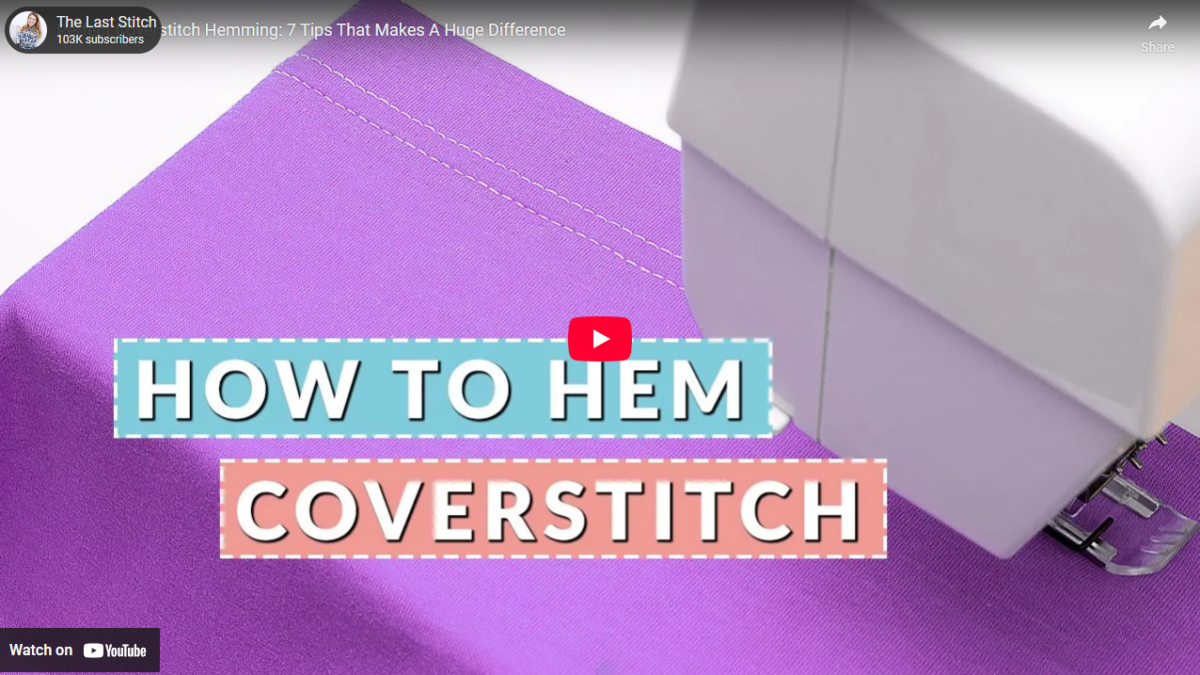
Coverstitch Machine Basics
(hem knits professionally)
@Thelaststitch
@GailPatriceDesign
Step-by-Step Instructions:
Learn the essential coverstitch machine basics to achieve clean, stretchy, and professional-looking hems on all your knit garments.
Materials Needed:
- Coverstitch machine (any brand or model)
- Knit fabric sample (like jersey or interlock)
- Matching or contrasting thread (3 or 4 spools depending on machine setup)
- Tweezers (optional, for threading)
- Scissors or thread snips
- Fabric marking tools (for guides)
- Scrap interfacing (optional for stabilizing lightweight knits)
Tips for Perfect Belt Loops:
- Practice on scrap fabric before starting your final project.
- Use high-quality thread to reduce skipped stitches and thread breakage.
- Always test differential feed and stitch length for each fabric type.
- Mark hem allowances and press folds before sewing for best results.
- Avoid pulling the fabric while stitching to maintain even stitches.
1. Understand the Coverstitch Setup
- Familiarize yourself with your machine’s needle and looper positions.
- Decide whether to use one, two, or three needles—double-needle setups are most common for hemming.
- Check your manual for recommended needle types (usually ballpoint or stretch needles).
2. Thread the Machine Properly
- Raise the presser foot to release tension and follow the thread path exactly.
- Thread each needle from front to back and the looper from back to front (varies by brand).
- Use tweezers to help guide thread through small spaces.
3. Adjust Tension and Stitch Settings
- Set the tension for each thread based on your fabric and thread type.
- Adjust differential feed—higher for stretchy knits, lower for woven-like knits.
- Choose a stitch length between 2.5 and 4mm depending on desired finish.
4. Prepare the Hem
- Press up your hem using a hem gauge or ruler for even folds.
- Pin or use a washable fabric marker to align guides.
- Optional: Add lightweight fusible knit interfacing to stabilize thin fabric.
5. Begin Sewing Your Hem
- Position the fabric under the foot with the folded edge to the left of the needles.
- Lower the presser foot and start stitching about 1 inch before the hem begins.
- Keep the fabric flat and feed it smoothly—don’t stretch or tug.
6. Finishing and Removing the Fabric
- Sew past the hem edge about 1 inch.
- Raise the presser foot and gently pull the fabric back to release the threads.
- Clip threads close to the fabric or use the pull-through method (detailed in many tutorials).
7. Press the Finished Hem
- Press the hem lightly with a steam iron to flatten stitches and set them in place.
- Use a pressing cloth to avoid shine or stretching the knit.