How to Heirloom Sewing: Pintucks
@closetcorepatterns
@SeamworkVideo
Step-by-Step Instructions:
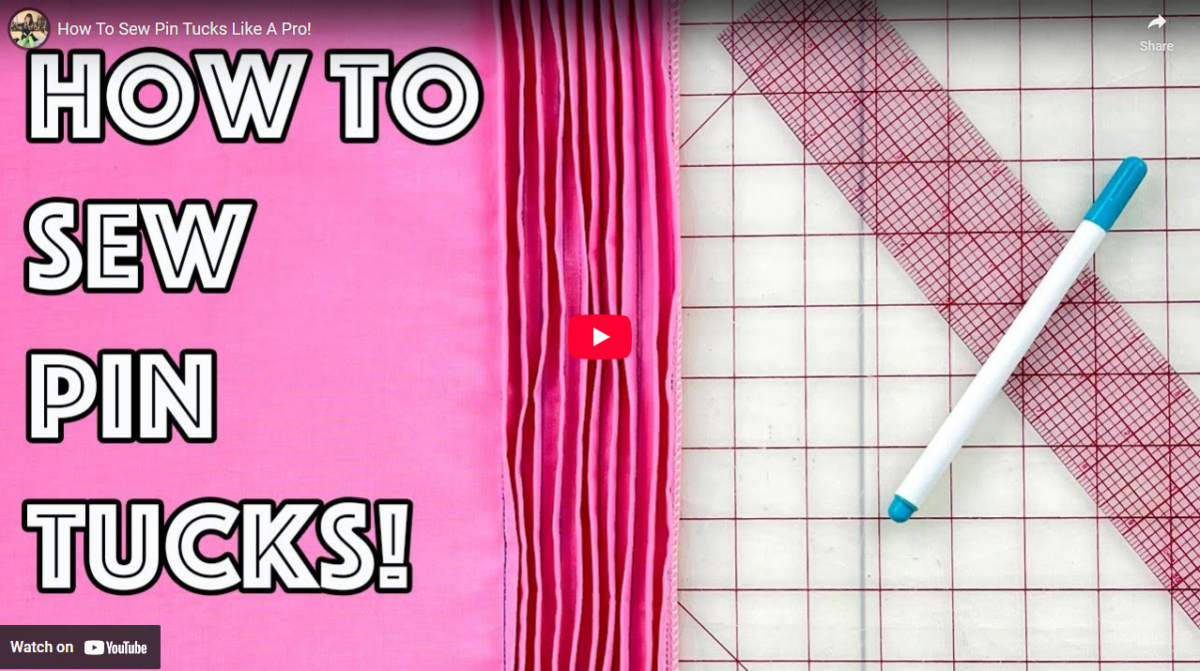
Learn how to sew pintucks with precision for beautiful, raised texture on garments, heirloom sewing, and decorative home textiles.
Materials Needed:
- Lightweight to medium-weight fabric (batiste, voile, lawn, or cotton)
- Matching thread
- Fine universal or Microtex needle (size 70/10 or smaller)
- Twin needle (1.6 mm–2.5 mm width is standard for pintucks)
- Pintuck foot (optional but recommended)
- Water-soluble fabric marker or chalk
- Iron and pressing cloth
- Sewing machine
Tips Before You Begin:
- Use fine thread and lightweight fabric for best results—heavier fabric will not show crisp pintucks.
- Always test your settings on a fabric scrap before sewing your final piece.
- Use a pintuck foot with grooves that match your twin needle for even spacing.
- Lightly starch your fabric to stabilize it before marking and sewing.
- Use a longer stitch length (3.0–3.5) to prevent bunching.
1. Prepare and Mark the Fabric
- Press your fabric smooth and lightly starch it if needed.
- Mark lines where the pintucks will be placed using a ruler and water-soluble fabric pen or chalk.
- Keep lines parallel and evenly spaced for symmetrical results.
2. Set Up the Machine
- Insert the twin needle into your sewing machine.
- Thread each eye of the twin needle with a separate spool of thread, following your machine’s twin needle threading instructions.
- Attach the pintuck presser foot, aligning grooves with the width of the twin needle.
3. Sew the Pintucks
- Place your fabric under the presser foot, aligning the marked line under the center of the twin needle.
- Stitch along the marked lines, keeping a consistent stitch length and speed.
- Allow the fabric to naturally raise between the twin needles, forming a pintuck ridge.
- Use the grooves in the pintuck foot to guide subsequent rows for even spacing.
4. Press the Pintucks
- Press each pintuck flat, using a pressing cloth to protect the fabric.
- For sharper tucks, press the pintuck to one side if desired or leave it raised for dimensional texture.