

Sew a Rolled Hem
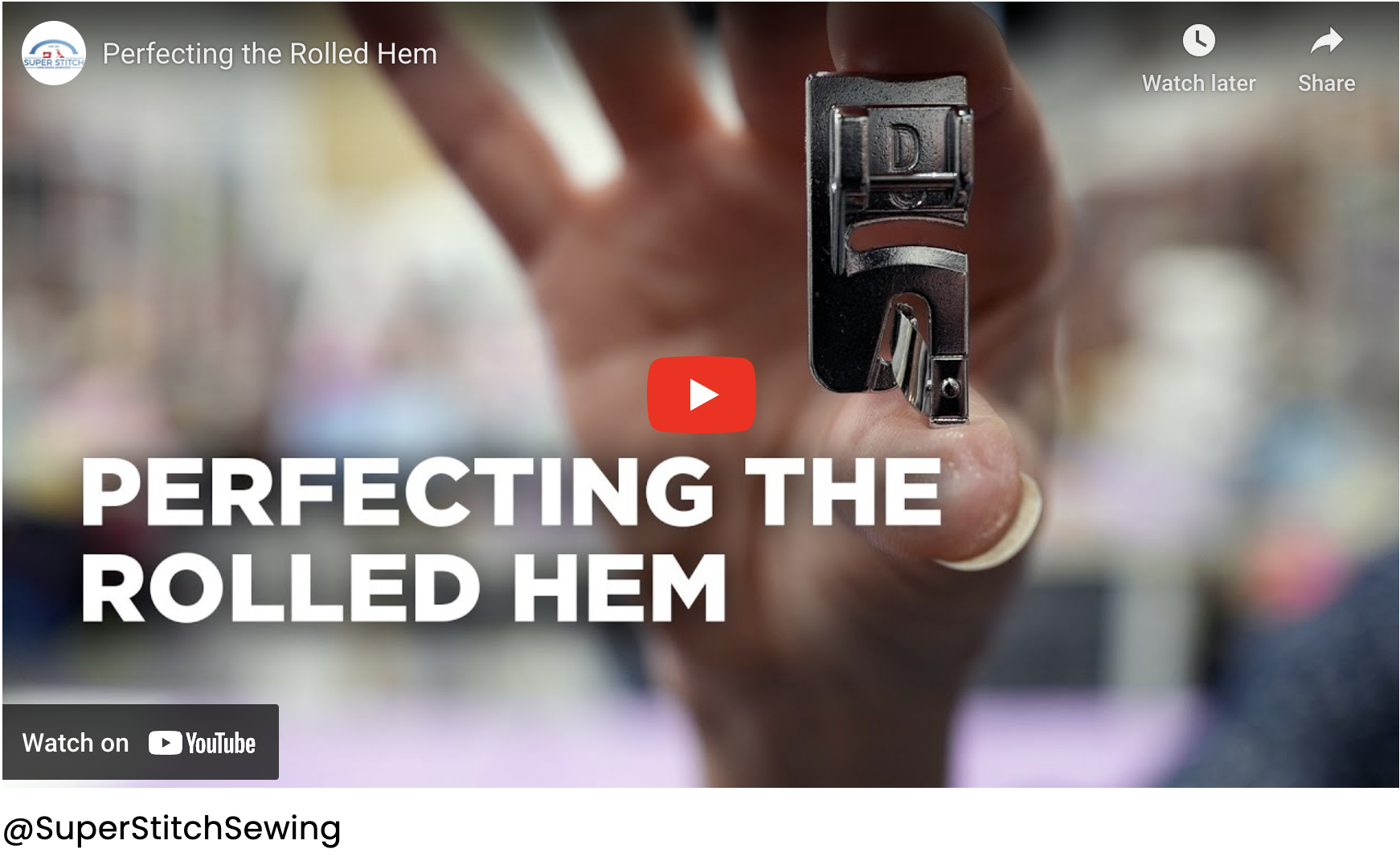
with a Rolled Hem Foot
Step-by-Step Instructions:
Learn how to sew a rolled hem with a rolled hem foot to create delicate, professional narrow hems on scarves, napkins, ruffles, and lightweight garment edges—perfect for beginners and advanced sewists seeking fast, polished finishes without hand-rolled hems.
Materials Needed:
- Lightweight to medium-weight fabric (cotton lawn, voile, silk, rayon, chiffon, or lightweight linen)
- Rolled hem foot (sizes: 2mm, 3mm, 4mm, or 6mm depending on desired hem width)
- Sewing machine with straight stitch capability
- Matching all-purpose or fine thread (50wt or 60wt for sheers)
- Fabric scissors or rotary cutter and mat
- Seam ripper (for starting the feed)
- Fabric marking tool (optional)
- Pins or clips
- Iron and pressing surface
- Optional: Spray starch or sizing for crisp edges on slippery fabrics
- Optional: Tear-away stabilizer for very sheer or stretchy fabrics
Tips for Perfect Rolled Hems:
- Match foot size to fabric weight: Use 2mm or 3mm for sheers and silks; 4mm or 6mm for cottons and linens.
- Start with a diagonal cut: Trim the leading edge at a 45-degree angle to help the fabric feed into the scroll smoothly.
- Press or starch first: Lightly press or starch slippery fabrics to give them body and prevent tunneling or puckering.
- Sew slowly and guide gently: Let the foot do the rolling; only guide the fabric lightly without pulling or pushing.
- Stitch length matters: Use a shorter stitch (1.5–2mm) for fine fabrics and a slightly longer stitch (2–2.5mm) for heavier fabrics.
- Test on scraps: Practice on fabric scraps to find the right tension, stitch length, and feeding technique before hemming your project.
- Reduce top tension slightly: Lowering tension by one number often prevents puckering and thread breakage on delicate fabrics.
- Pivot at corners carefully: Stop with needle down, lift presser foot slightly, pivot fabric, and continue feeding into the scroll.
1. Select and Attach the Rolled Hem Foot
- Choose the rolled hem foot size appropriate for your fabric weight (2mm, 3mm, 4mm, or 6mm).
- Remove your standard presser foot and snap or screw on the rolled hem foot according to your machine’s instructions.
- Thread your machine with matching thread and set to a straight stitch.
2. Prepare the Fabric Edge
- Press the fabric edge flat and remove any wrinkles.
- Optional: Apply light spray starch or sizing to slippery or sheer fabrics and press again for extra body.
- Trim the raw edge cleanly with fabric scissors or a rotary cutter; ragged edges will not feed smoothly.
- At the starting point, trim the leading edge at a 45-degree angle to create a tapered entry point.
3. Begin the First Fold Manually
- Fold over the fabric edge twice by hand, creating a narrow double fold approximately 1/8 in (3mm) wide, matching the scroll width of your foot.
- Hold the folded edge in place and position it under the presser foot so the needle will pierce through all layers.
- Lower the presser foot and take 2–3 stitches to anchor the fold.
- Stop with the needle down.
4. Feed the Fabric into the Scroll
- Lift the presser foot slightly while keeping the needle down.
- Gently guide the raw edge of the fabric into the curved scroll (the funnel or curl) at the front of the rolled hem foot.
- The scroll will automatically fold the fabric twice as it feeds through.
- Lower the presser foot and begin sewing slowly at a steady pace.
5. Sew the Rolled Hem
- Let the foot feed the fabric; guide it lightly without pulling or pushing.
- Keep the raw edge aligned and feeding smoothly into the scroll; if the fabric slips out, stop with the needle down, reposition, and continue.
- Maintain an even, slow to moderate speed for consistent rolling and stitching.
- The needle should catch the inner fold to secure the rolled hem.
6. Adjust Tension and Stitch Length as Needed
- If the fabric puckers, reduce the top tension slightly or increase stitch length.
- If stitches are skipping, slow down and ensure fabric is feeding smoothly; check needle sharpness.
- If the hem is not catching or rolling unevenly, reposition the fabric in the scroll and guide more deliberately.
7. Navigate Curves and Corners
- For gentle curves, sew slowly and guide the fabric smoothly through the scroll without stopping.
- For sharp corners, stop with the needle down about 1 in before the corner; lift the presser foot slightly and pivot the fabric so the new edge begins feeding into the scroll; lower the foot and continue stitching.
- Note: Very sharp 90-degree corners may require hand-finishing or mitering; rolled hem feet work best on straight edges and gentle curves.
8. Finish the Hem
- When you reach the end, sew off the edge completely and backstitch or lockstitch if your machine allows.
- Clip threads close to the fabric.
- Press the finished rolled hem lightly with a dry or steam iron to set the stitches.
9. Troubleshooting Common Issues
- Fabric won’t feed into scroll: Trim a longer diagonal starting edge, hold the initial fold more firmly, or manually feed the first inch through.
- Hem puckers or tunnels: Lower top tension, lengthen stitch slightly, press fabric with starch, or use a finer needle (60/8 or 70/10 for sheers).
- Uneven rolling: Ensure raw edge stays aligned in the scroll; sew slower and guide lightly.
- Thread breaks: Check tension, use quality thread, replace needle, and ensure fabric isn’t pulling.
- Foot jams: Clean lint from the scroll channel and ensure fabric is trimmed cleanly without frayed threads.
More Sewing Techniques!


Top FAQs for this technique:
Use 2mm or 3mm for sheer and lightweight fabrics like chiffon and silk; use 4mm or 6mm for medium-weight cottons and linens.
Lower your top tension slightly, increase stitch length, press or starch the fabric first, or use a finer needle for delicate fabrics.
It’s challenging; rolled hem feet work best on woven fabrics. For knits, consider a twin needle hem or serged rolled hem instead.
Trim the leading edge at a 45-degree angle, manually fold the edge twice, stitch 2–3 stitches to anchor, then gently guide the raw edge into the scroll.