
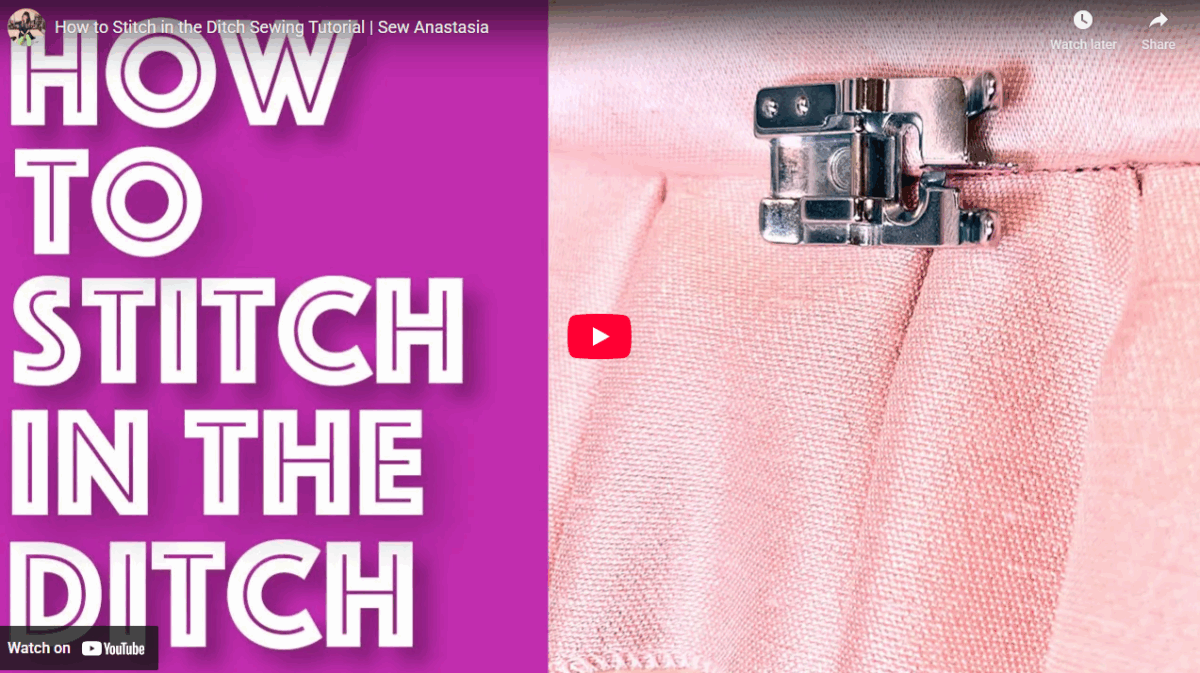
How to Stitch in the Ditch
@EvelynWood
Step-by-Step Instructions:
Learn how to stitch in the ditch to invisibly secure quilt layers, finish waistbands, and stabilize seams by sewing precisely in the groove of existing seam lines—perfect for beginners and advanced sewists seeking professional-looking results.
Materials Needed:
- Project with pressed seams (quilt, garment, or home décor item)
- Sewing machine with straight stitch capability
- Thread matching the fabric or invisible monofilament thread
- Stitch in the ditch foot (optional but highly recommended)
- Edge-joining foot or regular presser foot as alternative
- Walking foot for quilting projects
- Quilting gloves or grip aids for large projects
- Fabric clips or pins
- Seam ripper for corrections
- Iron and pressing mat
- Optional: Stiletto or awl for guiding fabric
- Optional: Machine needle appropriate for project (quilting 90/14 or universal 80/12)
Tips for Perfect Stitch in the Ditch:
- Press first, stitch second: Well-pressed seams create a defined ditch that’s easier to follow and produces cleaner results.
- Use the right foot: A stitch in the ditch foot has a center guide blade that rides in the seam groove for accuracy.
- Thread choice matters: Match thread to the darker fabric or use monofilament for true invisibility across color changes.
- Reduce presser foot pressure: For quilts, slightly reducing pressure helps prevent shifting between layers.
- Go slow and steady: This technique requires precision over speed; use your machine’s speed control if available.
- Secure your layers: Baste or pin adequately to prevent shifting, especially on large quilts or slippery fabrics.
- Test on a sample: Practice on a scrap sandwich with the same number of layers as your project.
- Pull threads to the back: Start and stop with threads pulled to the back and tied off for invisible starts and stops.
1. Prepare Your Project
- Press all seams thoroughly to create well-defined ditches.
- For quilts, ensure all three layers are basted together using pins, spray basting, or hand basting.
- For garments, press seams toward the side where you’ll be stitching (typically toward the less visible side).
- Mark start and stop points with removable fabric marker if needed for precision.
2. Set Up Your Machine
- Install a stitch in the ditch foot or edge-joining foot if available; otherwise use a regular presser foot.
- Thread machine with matching thread on top and in bobbin, or monofilament on top with matching bobbin thread.
- Select straight stitch with standard length (2.5-3.0 mm for garments, 3.0-3.5 mm for quilts).
- For quilts, engage walking foot if stitching straight lines; use free-motion setup for curved ditches.
- Test tension on a scrap sandwich matching your project’s thickness.
3. Position and Align
- Place project under presser foot with the seam line (ditch) aligned with your foot’s center guide or needle position.
- For pressed-open seams, stitch directly on the seam line.
- For pressed-to-one-side seams, stitch on the lower side of the seam (the side without the seam allowance bulk).
- Lower presser foot and pull both threads toward the back.
4. Begin Stitching
- Start with needle down in the ditch at your beginning point.
- Take 3-4 tiny securing stitches (0.5 mm length) or backstitch if the area will be covered.
- Return to normal stitch length and begin sewing slowly along the seam line.
- Keep your eyes focused slightly ahead of the needle, not directly on it.
- Use your hands to gently spread the fabric on either side of the seam to open the ditch.
5. Maintain Alignment
- Guide fabric with even pressure, using a stiletto or awl to adjust alignment without getting fingers too close to needle.
- For long straight lines, stop periodically with needle down to readjust grip and check alignment.
- At intersecting seams, slow down and carefully navigate over bulk, using handwheel if necessary.
- Keep fabric flat and taut but not stretched.
6. Navigate Corners and Curves
- For corners: Stitch to corner point, stop with needle down, lift presser foot, pivot fabric 90 degrees, lower foot, continue.
- For curves: Reduce speed and make micro-adjustments continuously, stopping with needle down to reposition as needed.
- For circles: Work from outer edges toward center or vice versa to prevent puckering.
7. Finish Stitching
- At ending point, reduce stitch length to 0.5 mm and take 3-4 securing stitches, or backstitch if hidden.
- Lift presser foot with needle in highest position.
- Pull project toward back of machine and clip threads, leaving 4-6 inch tails.
- Pull top thread to back using a hand needle and tie off with bottom thread; trim excess.
8. Final Pressing and Inspection
- Press stitched areas lightly if needed, being careful with monofilament thread (use lower heat).
- Inspect from right side to ensure stitching is invisible or minimally visible.
- Check back for puckers or gathered areas; release and restitch if necessary.
- For quilts, continue with remaining ditches working from center outward or following your quilting plan.
More Sewing Techniques!

Top FAQs for this technique:
Stitch in the ditch follows the groove of existing seams to remain invisible, while topstitching is meant to be decorative and visible on the fabric surface.
Yes, you can use a regular presser foot or edge-joining foot, but a specialized stitch in the ditch foot with center guide makes the technique much easier and more accurate.
Monofilament (invisible) thread works best for multi-colored fabrics, while matching thread is ideal for solid colors and provides stronger seams.
Puckering usually results from improper basting, too-tight tension, pulling the fabric while sewing, or not using a walking foot on thick layers.