
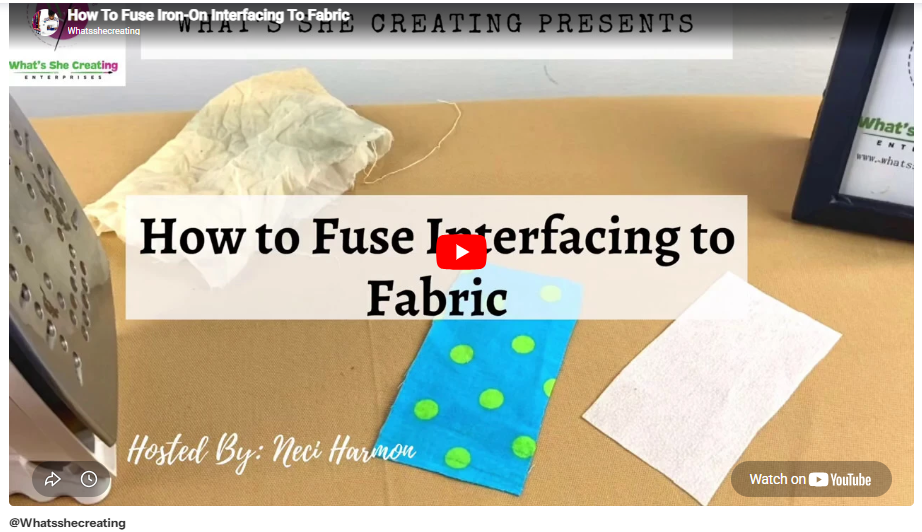
Applying Fusible Interfacing
(Adding Structure and Support to Your Sewing)
@Whatsshecreating
@ThreadsSewing
@TailoredTrends
Step-by-Step Instructions:
Fusible interfacing features a heat-activated adhesive on one side. It is ironed onto the wrong side of fabric to add stiffness, structure, and durability to collars, cuffs, facings, and bag-making projects.
Materials Needed:
- Fusible interfacing (appropriate weight for your fabric)
- Fabric pieces
- Iron and ironing board
- Press cloth (cotton scrap or muslin)
- Spray bottle with water (optional, for steam)
Tips for Success:
- Always pre-wash your fabric, but never pre-wash your interfacing!
- Do not glide the iron back and forth like you are ironing a shirt; press and lift.
- Always use a press cloth to protect your iron’s soleplate from melted glue.
1. Identify the Glue Side
- Feel both sides of your fusible interfacing. One side will be smooth, and the other will feel slightly rough or bumpy. The rough side is the adhesive glue that will melt into your fabric.
2. Cut and Position
- Cut the interfacing piece (often recommended to be 1/8 inch smaller than the pattern piece to keep seams thin). Lay your main fabric right-side down on the ironing board. Place the interfacing on top, bumpy glue side down against the wrong side of the fabric.
3. Protect with a Press Cloth
- Lay a damp or dry press cloth over the interfacing. This protects your iron from any glue that might seep over the edges or through the fabric.
4. Press and Hold
- Set your iron to the appropriate heat setting (usually wool or cotton). Press the iron down firmly onto the press cloth and hold it perfectly still for 10 to 15 seconds. Lift the iron completely up, move to the next section, and press again. Overlap slightly until the entire piece is fused.
5. Let it Cool Completely
- This is the most important step! Do not move the fabric while it is still warm. The glue needs time to cool and permanently bond to the fabric fibers. Once cool, check the edges to ensure a solid fuse.
Top FAQs for Fusible Interfacing:
Why did my interfacing bubble and wrinkle? +
Bubbling usually occurs for three reasons: your iron wasn’t hot enough to melt the glue evenly, you didn’t press down for long enough, or you slid the iron back and forth which shifted the layers. It can also happen if your main fabric shrinks under the heat because it wasn’t pre-washed.
How do I get melted interfacing glue off my iron? +
If you accidentally fuse the glue to your iron, unplug it and let it cool slightly. While it is still warm, rub a dryer sheet vigorously over the soleplate to lift the glue, or use a commercial iron cleaning paste (like Faultless Hot Iron Cleaner) on a scrap of cotton.
Should I use woven or non-woven interfacing? +
Woven interfacing acts like real fabric with a straight grain and a bias, making it drape beautifully for garment sewing. Non-woven interfacing is paper-like and has no grain direction; it is excellent for crafts, bag making, or areas that need very stiff support without drape.