
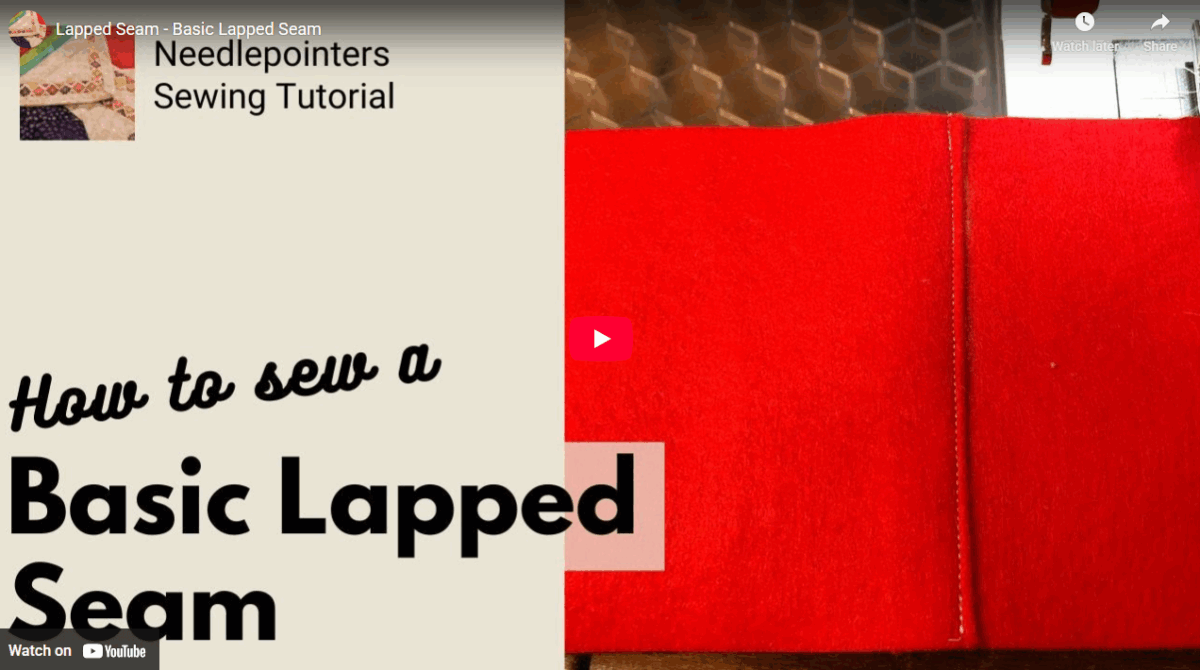
How to Sew a Lapped Seam
@Needlepointers
@Needlepointers
Step-by-Step Instructions:
Learn how to sew a lapped seam to create a flat, decorative join where one fabric piece overlaps another with visible topstitching—perfect for sportswear, activewear, home décor projects, and achieving a professional finish on non-fraying fabrics like leather, vinyl, and felt.
Materials Needed:
- Two fabric pieces to be joined (woven cotton, knit jersey, faux leather, vinyl, felt, or denim)
- Sewing machine and matching or contrasting thread
- Fabric scissors or rotary cutter and mat
- Quilting ruler or straight edge
- Fabric marking tool (chalk, frixion pen, or washable marker)
- Pins, clips, or Wonder Tape for holding layers
- Iron and pressing surface (for woven and natural fibers only; avoid heat on vinyl and faux leather)
- Optional: Edgestitch foot or topstitch foot for precision
- Optional: Leather or denim needle for heavier fabrics
- Optional: Wash-away stabilizer for knits to prevent stretching
Tips for Perfect Lapped Seams:
- Mark your seam allowance: Draw or press the fold line on the overlapping piece so it laps precisely where intended.
- Press crisp folds on wovens: A sharp crease on the overlapping edge helps maintain accuracy as you stitch; use a hot iron and steam.
- Skip the iron on synthetics: For vinyl, faux leather, or coated fabrics, finger-press or use a clapper; heat can melt or damage these materials.
- Use clips or tape instead of pins: Pins leave permanent holes in vinyl and leather; use Wonder Tape, fabric glue stick, or clips to hold layers.
- Stitch from the right side: Lapped seams are stitched with both fabric pieces facing up, making the topstitching intentionally visible.
- Keep stitch lines parallel: Use a seam guide, tape on the machine bed, or edgestitch foot to maintain even distance from the folded edge.
- Choose thread color wisely: Matching thread blends the seam; contrasting thread makes it a design feature.
- Test on scraps: Practice folding, overlapping, and stitching on fabric scraps to confirm your seam allowance and stitch spacing.
1. Prepare the Fabric Pieces
- Identify which piece will overlap (top layer) and which will be underneath (bottom layer).
- On the overlapping piece, mark the seam allowance along the edge that will be folded under (commonly 1/4 in to 5/8 in depending on your project).
- If using woven fabric, press the seam allowance to the wrong side along the marked line, creating a crisp fold. For non-woven fabrics like felt or leather, folding is not necessary; you can simply overlap raw edges.
2. Position the Layers
- Lay the bottom fabric piece right side up on your work surface.
- Place the overlapping piece on top, right side up, so the folded edge (or raw edge if not folded) overlaps the bottom piece by the desired seam allowance.
- Align any pattern markings, notches, or design lines to ensure the pieces are positioned correctly.
- Secure the layers with pins, clips, or Wonder Tape placed away from your intended stitch line.
3. Topstitch the Lapped Seam
- Set your machine to a straight stitch with a medium stitch length (2.5 to 3.0 mm for most fabrics; slightly longer for thick materials).
- Starting at one end of the seam, stitch along the folded or overlapped edge, keeping the needle a consistent distance from the edge (commonly 1/8 in to 1/4 in for an edgestitch, or further in for a decorative topstitch).
- Backstitch at the beginning and end to secure the stitching.
- Keep the fabric layers flat and aligned as you sew; do not pull or stretch, especially on knits.
4. Add a Second Row of Topstitching (Optional)
- For added strength and a more polished look, stitch a second parallel row of topstitching 1/4 in to 3/8 in away from the first row.
- This is common in activewear, jeans, and home décor projects.
- Ensure both rows are evenly spaced and parallel by using your machine’s seam guide or placing painter’s tape on the machine bed as a guide.
5. Press the Seam (If Appropriate)
- For woven fabrics and natural fibers, press the lapped seam flat from the right side to set the stitches and smooth any puckers.
- For vinyl, faux leather, or synthetic fabrics, skip the iron or use a pressing cloth on the lowest heat setting to avoid melting or damage.
- Finger-press or use a clapper to flatten seams on heat-sensitive materials.
6. Trim and Finish (If Needed)
- If the underlapping piece extends beyond the stitching, you may trim the excess seam allowance to reduce bulk, but this is optional and depends on your fabric and project.
- For woven fabrics that fray, consider finishing the raw edge of the underlapping piece with a zigzag stitch, serger, or pinking shears before lapping if the interior will be visible.
7. Troubleshooting Common Issues
- Puckering or rippling: Reduce thread tension slightly, use a shorter stitch length, or stabilize knits with wash-away stabilizer underneath.
- Uneven overlap: Ensure the folded edge is pressed sharply and pinned or clipped securely before stitching; use a ruler to double-check overlap width.
- Skipped stitches on thick fabrics: Switch to a heavier needle (leather, denim, or topstitch needle) and slow your stitching speed.
- Permanent pin holes in vinyl or leather: Always use clips, Wonder Tape, or fabric glue stick instead of pins on these materials.
More Sewing Techniques!
Top FAQs for this technique:
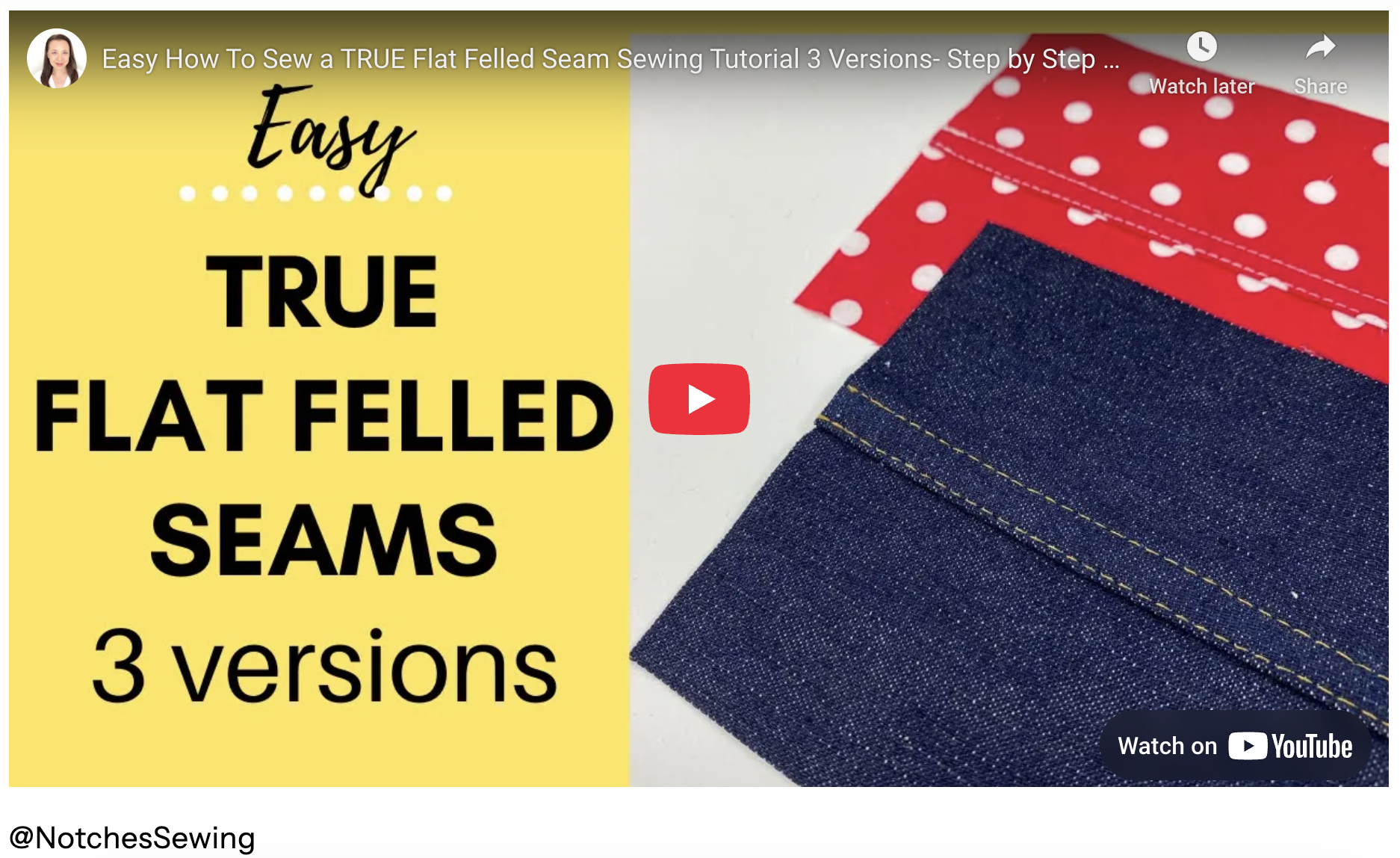
A lapped seam overlaps two layers with visible topstitching on the right side. A flat-felled seam encloses raw edges and has two rows of stitching, with no raw edges visible on either side.
Yes, but use a ballpoint or stretch needle, stabilize with wash-away stabilizer if needed, and avoid pulling the fabric as you sew to prevent stretching and rippling.
For woven fabrics, folding prevents fraying and gives a clean finish. For non-fraying fabrics like felt, leather, or vinyl, you can overlap raw edges without folding.
Lower your thread tension, use a shorter stitch length, press the fold crisply before stitching, or stabilize knits with wash-away stabilizer underneath the seam