
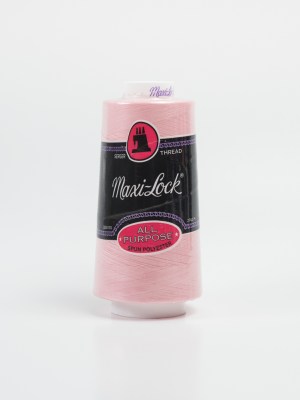
 Maxi-Lock Serger Thread 3000yds - Medium Pink
  Maxi-Lock Serger Thread 3000yds - Hacienda
  Maxi-Lock Stretch Serger Thread 2000yds - Lilac
  Maxi-Lock Stretch Serger Thread 2000yds - Purple
  Clover Pen Style Chaco Liner - Silver
 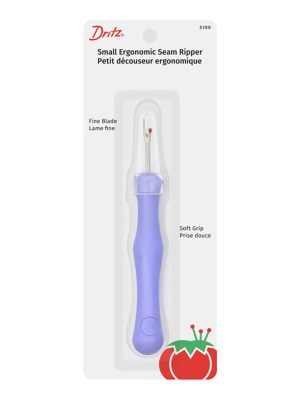 Dritz Small Ergonomic Seam Ripper - Purple
  Rit All-Purpose Box Fabric Dye - Cocoa Brown - 1 1/8oz
  Rit DyeMore Synthetic Fiber Dye - Sand Stone - 7oz Bottle
Wovens vs. Knits
@FittDesign Studio
@A Thrifty Notion
@Textile Vlog
Step-by-Step Instructions:
Understanding the fundamental differences between woven and knit fabrics is crucial for choosing the right material for your pattern. Wovens are structured and stable, while knits are stretchy and flexible. Using the wrong fabric type will completely alter the fit, drape, and success of your project!
Things to Consider:
- Fabric construction (interlocking loops vs. crisscrossing threads)
- Stretch and recovery
- Proper sewing machine needles
- Appropriate stitches
- Pattern requirements (ease)
Tips for Success:
- Always read the back of your pattern envelope! It will specifically state whether the pattern was drafted for a woven or a knit.
- If sewing with knits, avoid pulling or stretching the fabric as it feeds under the presser foot to prevent wavy seams.
1. Understand the Construction
- Wovens are made on a loom with multiple threads crisscrossing over and under each other (warp and weft). Examples: Quilting cotton, denim, linen.
Knits are made from a single, continuous yarn looped repeatedly through itself (just like hand-knitting a sweater, but on a microscopic scale). Examples: T-shirt jersey, sweater knits, spandex.
2. Do the Stretch Test
- Grab the fabric with two hands and pull it side to side. Knits will stretch significantly and bounce back. Wovens will feel stiff and barely budge (unless pulled exactly diagonally on the bias, or if they have spandex woven into them).
3. Check the Raw Edges
- Look at the cut edge of the fabric. Wovens will easily fray and unravel into individual threads. Knits will not fray; instead, the raw edges of jersey knits will often curl up or roll onto themselves.
4. Choose the Right Needle
- When sewing wovens, use a Universal or Microtex (Sharp) needle to cleanly pierce the tight threads. For knits, you must use a Ballpoint or Stretch needle. The rounded tip slips between the interlocking loops of the knit without cutting or breaking the fibers.
5. Select the Right Stitch
- Wovens can be sewn with a standard straight stitch. Knits require a stretch stitch (like a narrow zigzag or a lightning bolt stitch) so the seam can stretch with the fabric when worn. If you use a straight stitch on a tight knit, the thread will pop and break the moment the fabric stretches!
6. Match Fabric to Pattern
- Patterns designed for knits usually have “negative ease” (the garment is actually smaller than your body measurements and stretches to fit). Patterns for wovens have “positive ease” (they are drafted larger than your body so you can move, breathe, and put the garment on).
Top FAQs for Wovens vs. Knits:
What is the main difference between wovens and knits? +
The primary difference is how they are constructed. Wovens are made on a loom by weaving threads over and under each other, making them structurally stable. Knits are made of continuous interlocking loops of yarn, which gives them inherent stretch and flexibility.
Can I use a knit fabric for a woven pattern? +
Usually, no. Woven patterns are drafted with extra room (positive ease) so you can move. If you use a stretchy knit fabric for a woven pattern, the resulting garment will likely be far too large, droopy, and shapeless.
Can I use a woven fabric for a knit pattern? +
Absolutely not! Knit patterns are designed to be smaller than your actual body measurements, relying on the fabric to stretch over you. If you sew a knit pattern using a stiff woven fabric, you physically will not be able to put the garment on.
Why is my sewing machine skipping stitches on knit fabric? +
Skipped stitches on knits are almost always caused by using the wrong needle. A sharp needle will push the stretchy fabric down into the machine plate. You must switch to a Ballpoint or Stretch needle, which is designed to slip between the knit loops smoothly.
What does “stretch woven” mean? +
A stretch woven is a standard woven fabric that has a small percentage (usually 2% to 5%) of spandex or elastane woven into the threads. This gives rigid fabrics—like stretch denim or stretch sateen—a slight, comfortable give. However, they should still be treated as wovens when selecting patterns.
How do I stop my knit fabric from stretching out of shape while sewing? +
First, never pull or stretch the fabric with your hands as it feeds through the machine. Second, lower the presser foot pressure on your machine if it has that feature. Lastly, using a walking foot helps feed the top and bottom layers evenly, preventing wavy, stretched-out seams.
